The Sacred Valley of the Incas through which runs the sacred Urubamba river.
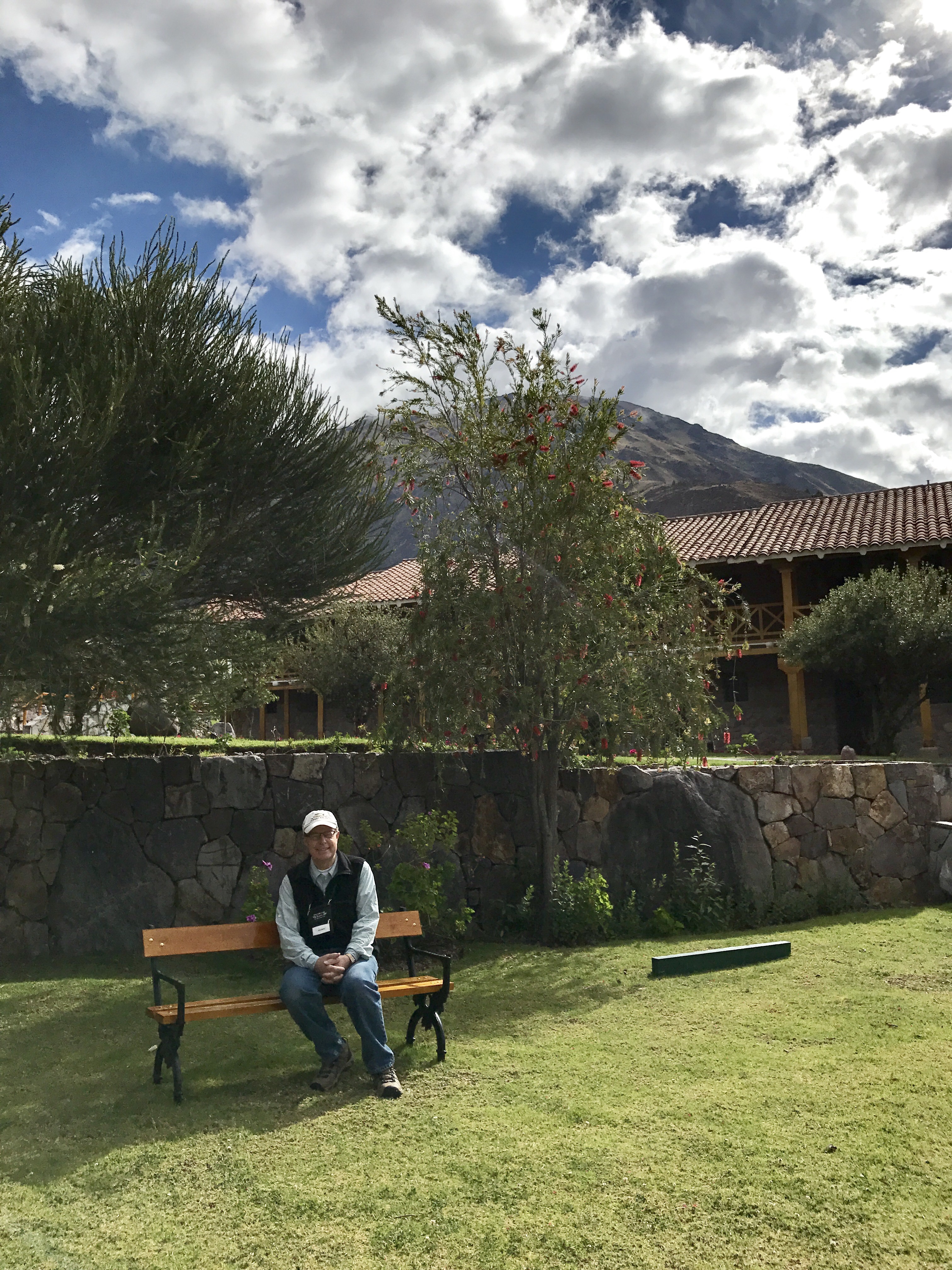
Our stay for the next few days was in this beautiful valley at a lovely resort.
We began our adventure with an excursion at one end of the valley to the archeological site of Ollantaytambo. Our first stop, the village of Ollantaytambo.
But first, time out for a little cultural interest item. Did you know the ancient people of this place are called Quechua? These are the same people we call Inka. The word Inca or Inka, actually refers only to the king. The king is Inka. The people are Quechua.
The most common language in Peru is actually Quechua, although Spanish is spoken everywhere.
A most generous and kind Quechua woman let us tour her traditional home.
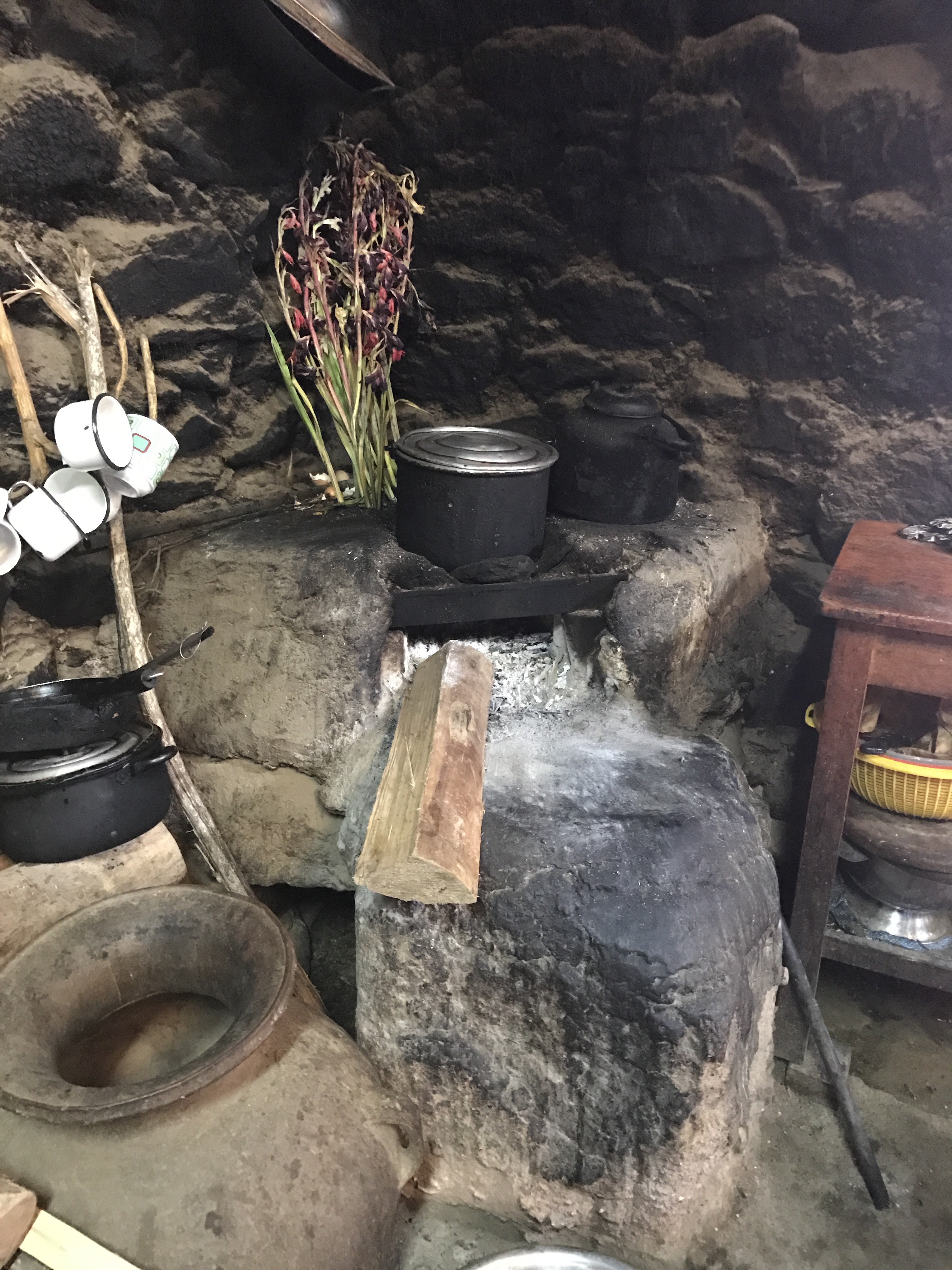
This is the cooking area of the home.
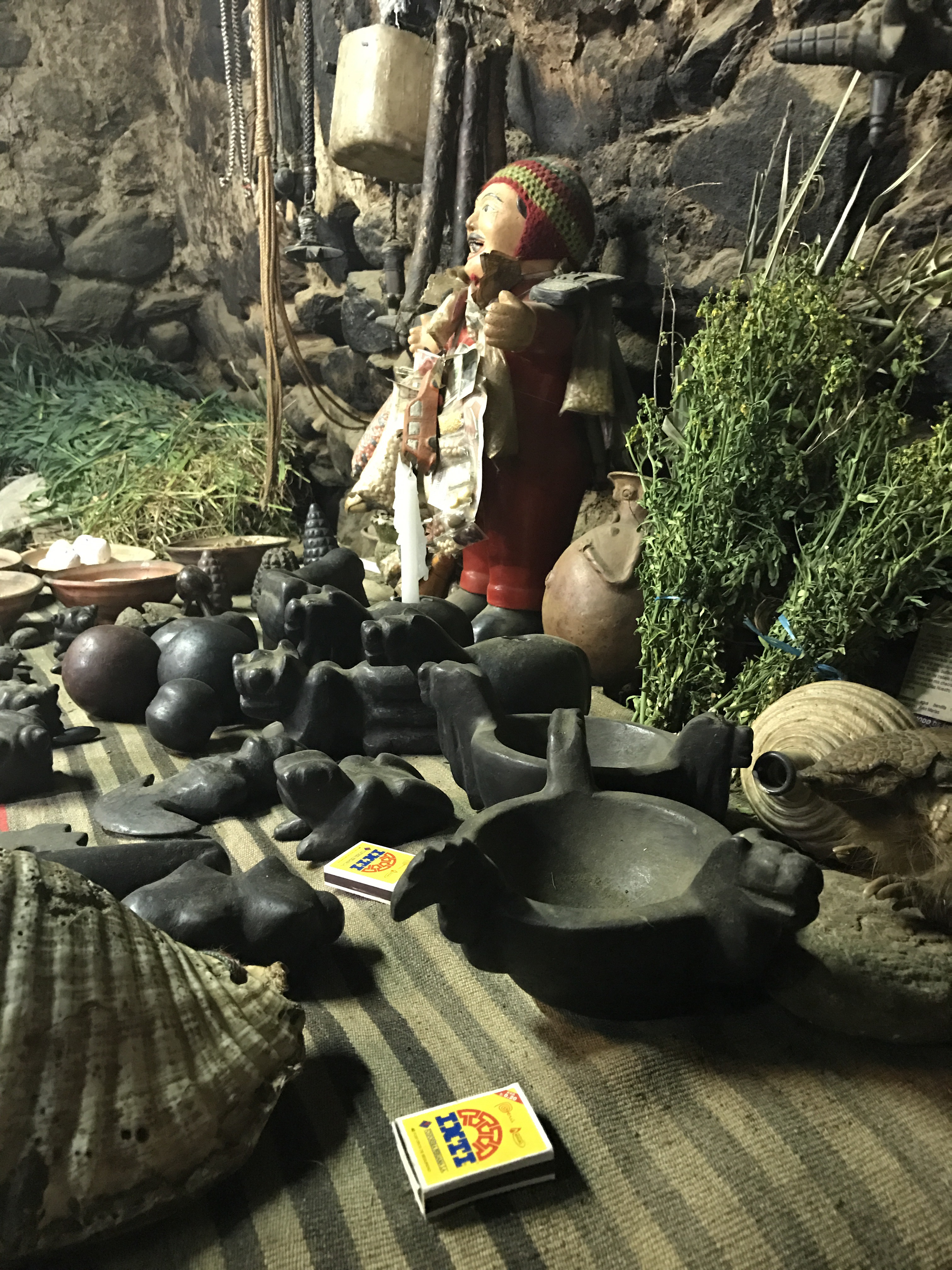
An altar that displays many native artifacts. Even matches??? Don’t have photoshop to edit out but you get the idea. Above this altar was a sacred area for honoring the ancestors as well as various instruments of Quechua life.
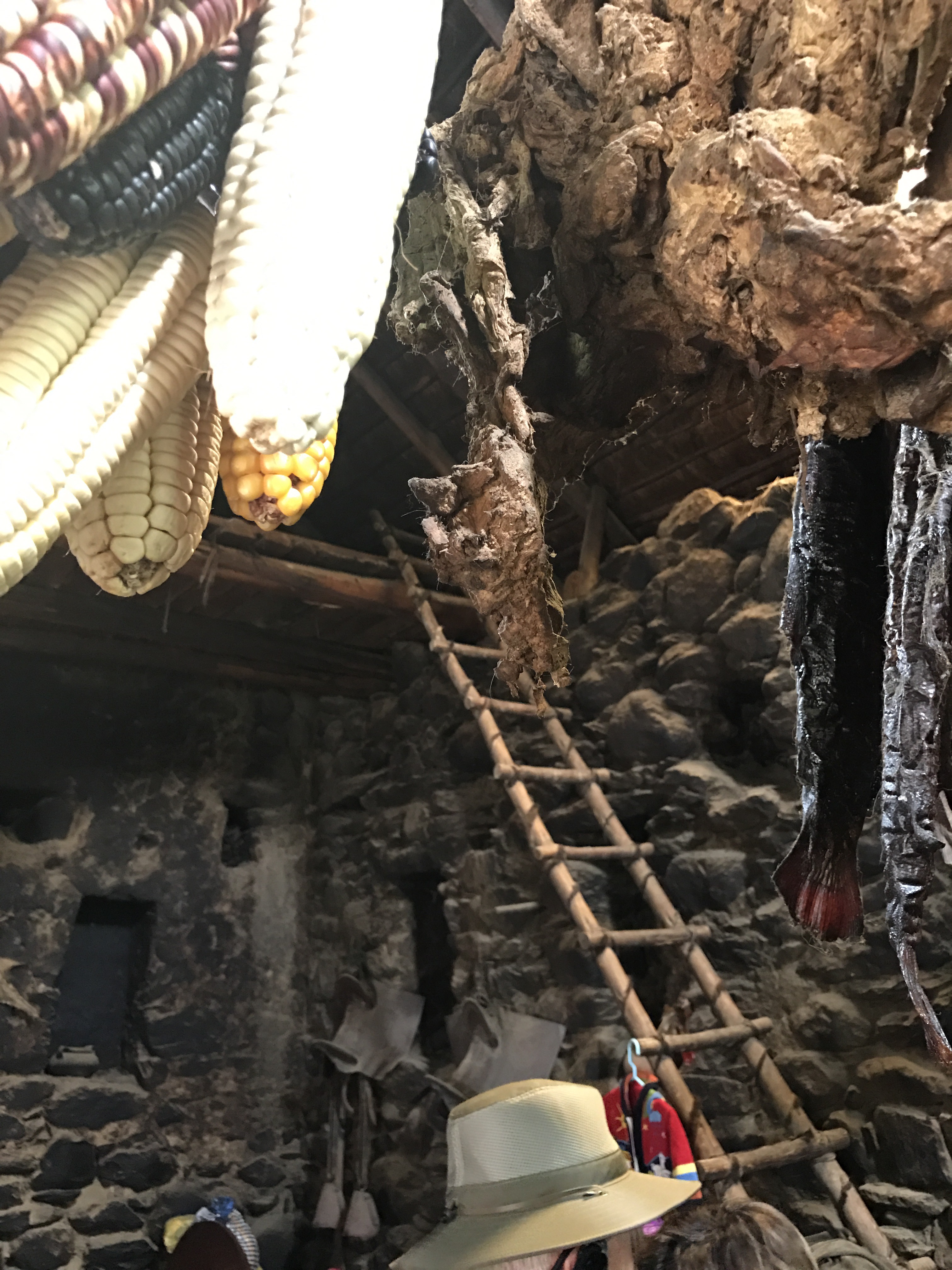
Dried corn and jerked llama hung from the rafters.
One area set aside for grinding of various grains. The Quechua people have over 147 (this number changes based on who is telling the story) varieties of corn. Each of the kernels on the cob are huge!! Three times the size of corn kernels in USA.

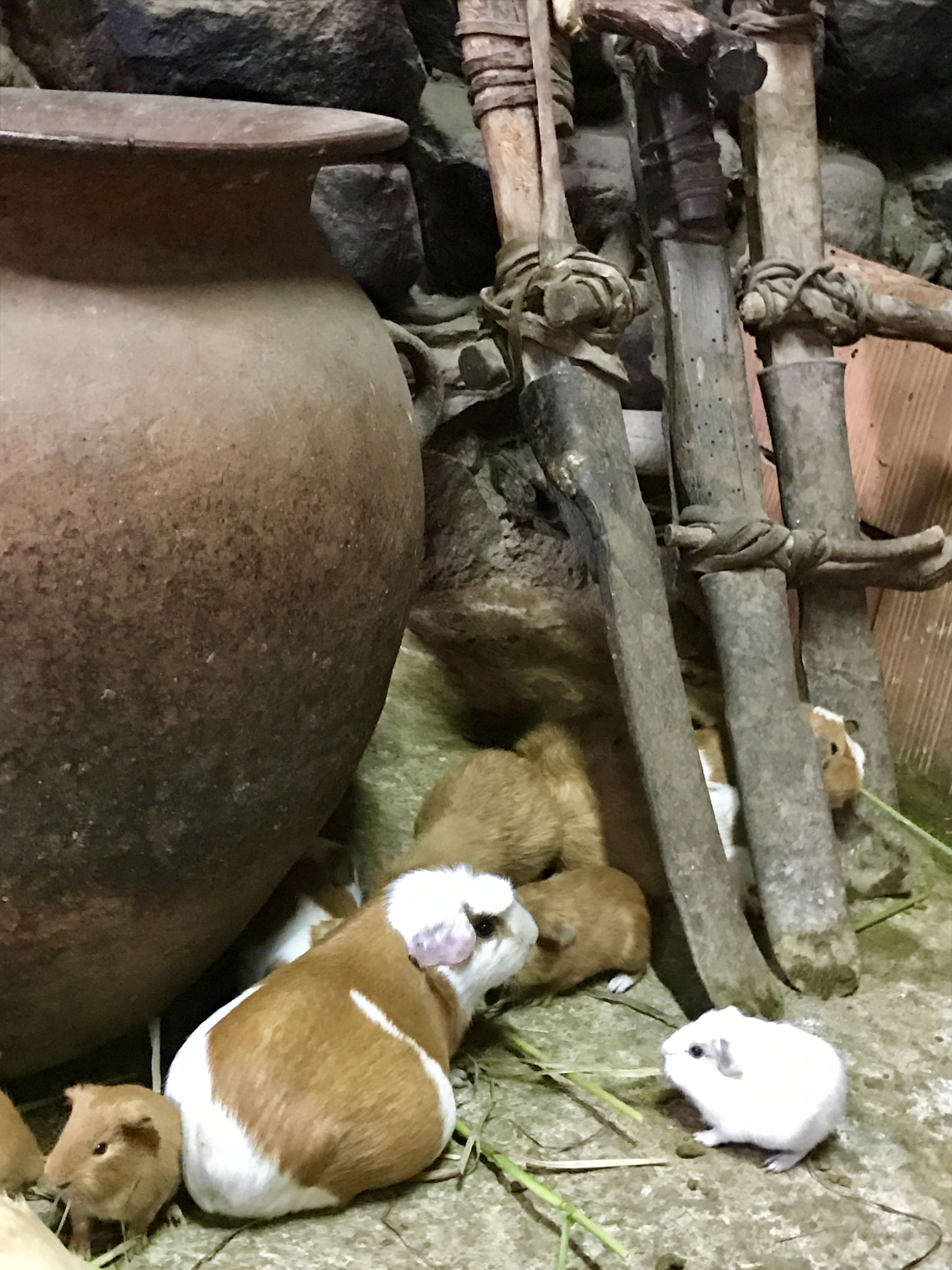
AND.. prepare to be most surprised by this next bit. In the home were little squealing guinea pigs scurrying all over the grey stone floors. Some babies, some bulging at the sides with new little guinea pigs waiting to be born. When inquiries were made we learned the cute little furry critters are for food. Yes. Mostly for very special occasions.
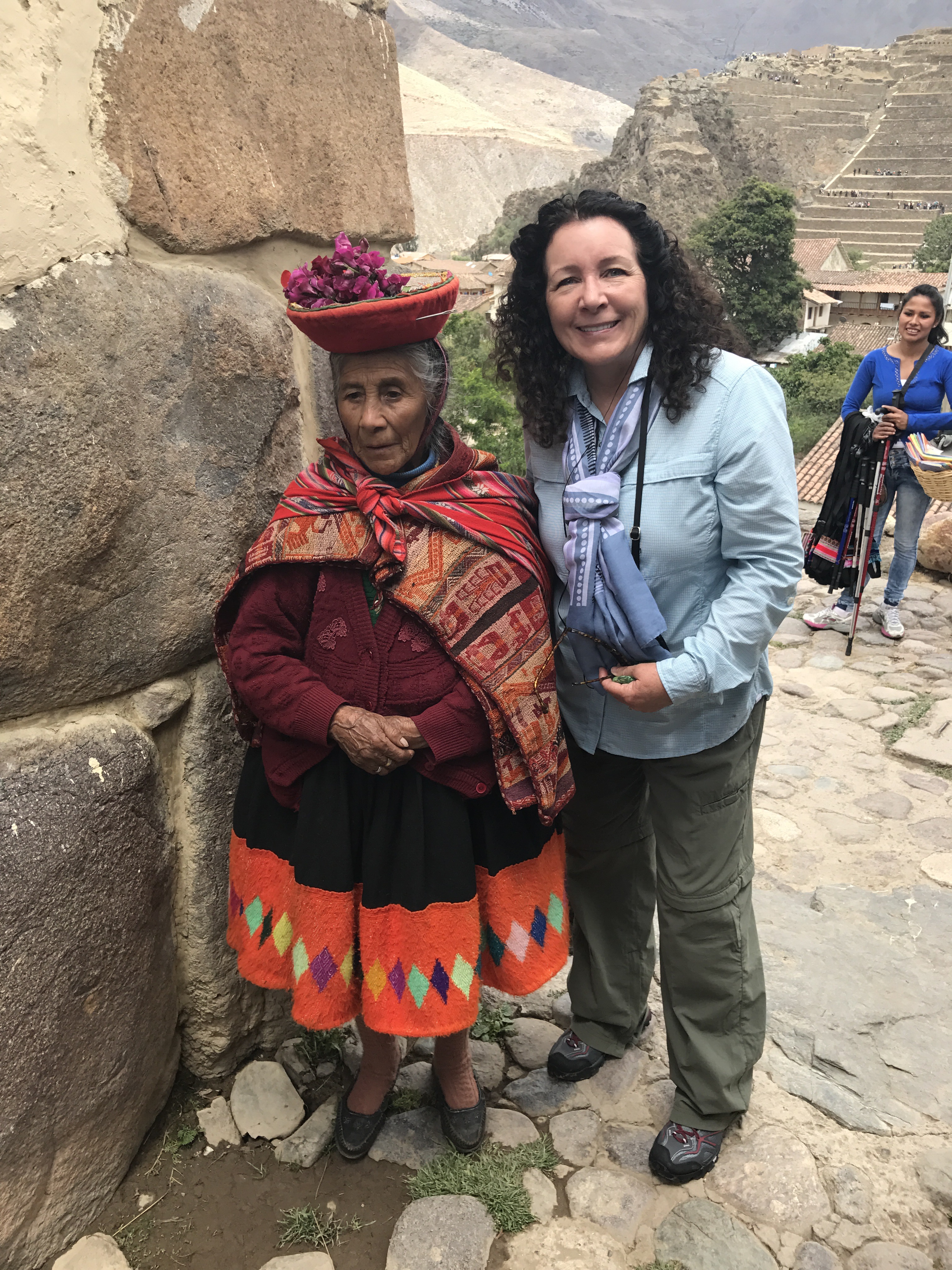
A little Quechua lady. How the ladies wear there very decorative hats is very important. If the hat is cocked to the side you are unmarried and straight on the head you are married. Each region of Peru has different style of hats. All her clothes were created or hand woven by her.
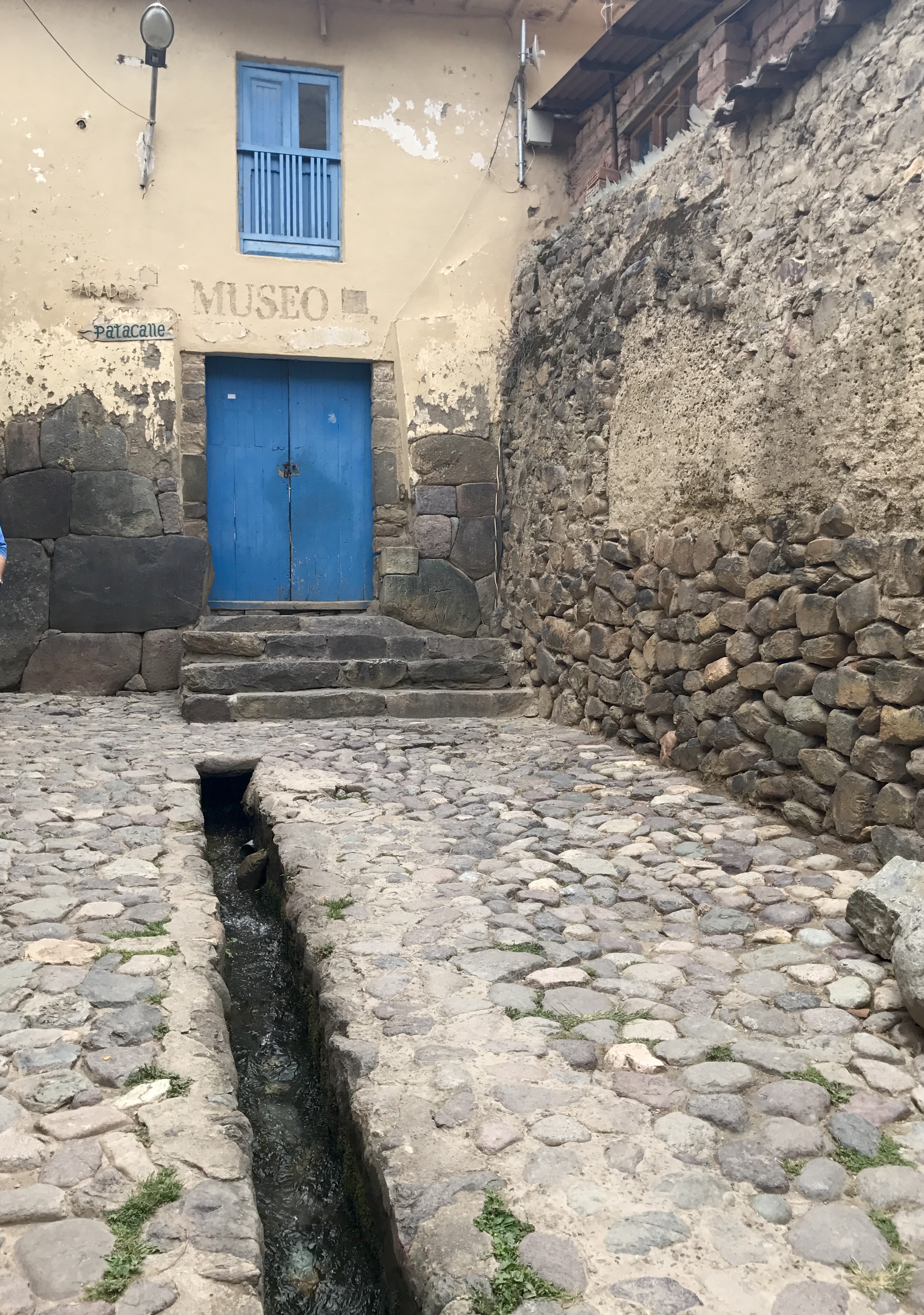
Water flows down from many glaciers to the Urubamba valley. The Inka have channeled the water to guide it to feed the farm lands and to provide fresh water for the villages and towns. These channels are seen everywhere.
 Bee in my Bonnet
Quite interesting history lesson. Love you are sharing.
LikeLike